
Flat Roofing SpecialistsFor Extensions, Garages& Commercial Properties
Stop wasting money on flat roof patches that fail within months. Get a modern system installed properly — EPDM, GRP, or single-ply membrane — with a 20+ year warranty and zero maintenance headaches.
★ EPDM & GRP Certified · 20+ Year Material Warranties · Free Site Survey
Modern Flat Roofing Systems That Actually Last
Flat roofs have a reputation for problems — but that reputation belongs to outdated felt systems, not modern solutions. Today's flat roofing technology delivers watertight, UV-resistant, and maintenance-free performance for 20+ years when properly installed.
At Topnotch Roofing & Property Maintenance Ltd, we specialise in three proven flat roofing systems: EPDM rubber membrane, GRP (fibreglass), and high-performance torch-on felt. Each system has specific strengths, and we recommend the right one based on your property, usage, and budget.
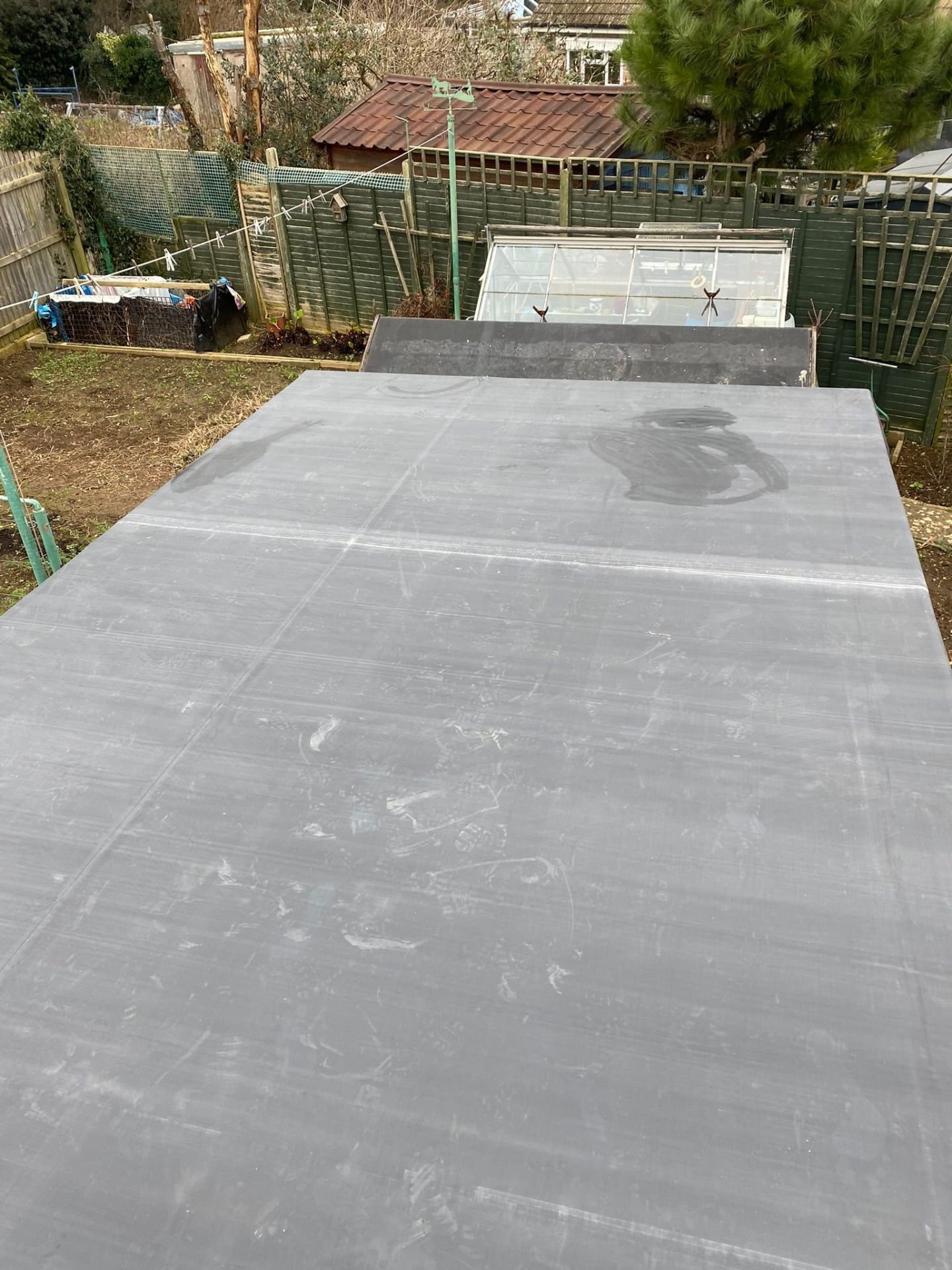
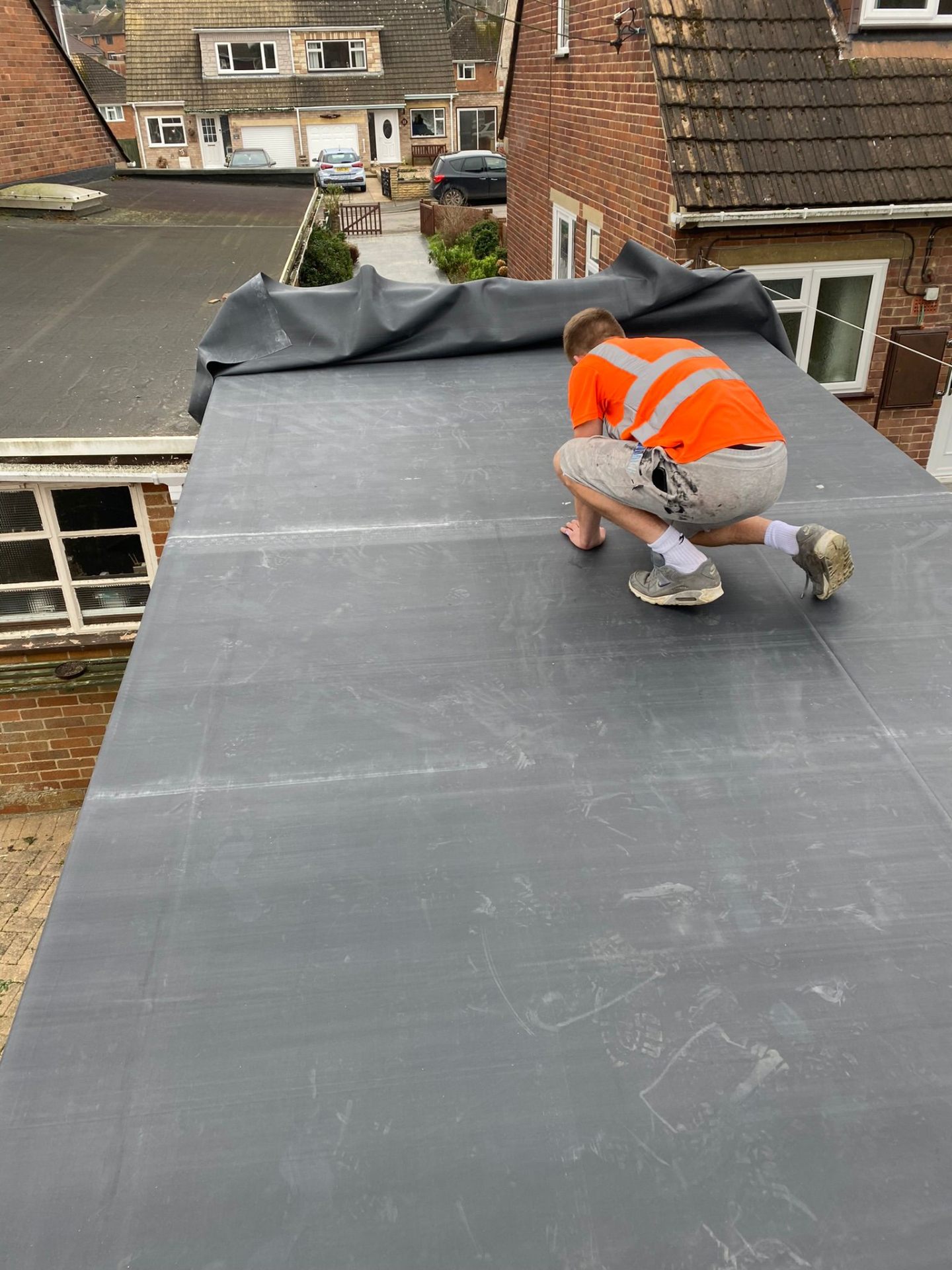
EPDM is the most popular choice for domestic extensions, garages, and porches. It's a single-piece rubber membrane that's UV-resistant, flexible in extreme temperatures, and carries a life expectancy of 30–50 years. GRP fibreglass creates a seamless, hard-wearing finish that's ideal for walkable areas, balconies, and flat roofs with complex detailing.
We serve homeowners and commercial property managers across Cirencester, Cheltenham, Gloucester, Swindon, Stroud, and the wider Gloucestershire area. Whether you need a failing felt roof replacing or a brand-new flat roof for an extension, we deliver a permanent solution — not a temporary fix.
Our Flat Roofing Work
Why Old Flat Roofs Fail — And What It Costs You
Ponding Water
Flat roofs with poor drainage collect standing water. This accelerates felt degradation, adds structural weight, and eventually finds its way through seams and joints.
Blistering & Cracking
Traditional felt expands and contracts with temperature changes, causing blisters and cracks. Each cycle weakens the membrane until water penetration becomes inevitable.
Failed Seams & Laps
Multi-piece felt systems rely on overlapping joints that are sealed with heat or adhesive. These seams are the weakest point and the first to fail — often within 5–10 years.
Trapped Moisture
If a flat roof is overlaid without removing the old felt, moisture gets trapped between layers. This causes rot in the deck beneath and creates a hidden problem that worsens over time.
Interior Water Damage
Flat roof leaks typically manifest as ceiling stains, peeling paint, and damp patches inside the property. The source is often metres away from the visible damage, making DIY diagnosis unreliable.
Repeated Repair Costs
Patching a failing flat roof provides temporary relief but doesn't address the underlying material failure. Many homeowners spend more on repeated patches than a full replacement would have cost.
How We Install Your New Flat Roof
Site Survey & Assessment
We inspect the existing flat roof, check the deck condition, drainage, and upstands. We measure precisely and discuss system options with you.
System Recommendation & Quote
Based on the survey, we recommend the best system for your property — EPDM, GRP, or torch-on felt — and provide a detailed fixed-price quote.
Strip & Deck Preparation
We remove the old roofing system, inspect the timber deck for rot, and replace any damaged boards. The deck is prepared to ensure a perfect bond with the new membrane.
Membrane Installation
The chosen system is installed to manufacturer specifications — fully adhered, sealed, and dressed into upstands, outlets, and perimeter details. No shortcuts.
Finishing & Quality Check
We install trims, check drainage flow, test all seals, and ensure every detail is watertight. Photos are taken and the warranty paperwork is completed.
Benefits of a Modern Flat Roofing System
Rapid Installation
Most domestic flat roof replacements are completed in 1–2 days. GRP and EPDM systems require no flame application, reducing installation time and risk.
Completely Watertight
Single-piece EPDM and seamless GRP eliminate the joints and laps where traditional felt systems fail. No seams means no weak points.
30+ Year Lifespan
EPDM carries a manufacturer-backed life expectancy of 30–50 years. GRP can last even longer with minimal maintenance. These aren't temporary fixes.
Maintenance-Free
Unlike felt, modern flat roof systems don't require regular patching, resealing, or recoating. Once installed, they simply work — year after year.
UV & Weather Resistant
EPDM and GRP are engineered to withstand UV radiation, frost cycling, and standing water without deteriorating. They perform in every season.
Clean, Professional Finish
Both EPDM and GRP deliver a clean, modern appearance with neat trim detailing. GRP in particular creates a smooth, hard-wearing walkable surface.
Flat Roofing Systems Explained
EPDM Rubber Membrane
EPDM (Ethylene Propylene Diene Monomer) is a synthetic rubber membrane that has become the industry standard for domestic flat roofing. It's supplied in large single sheets — typically covering an entire roof area without joints. The membrane is bonded to the deck using a contact adhesive and dressed into upstands and outlets using specialist trims and sealants. EPDM is flexible at temperatures down to -40°C and resistant to UV degradation, ozone, and weathering. With a life expectancy of 30–50 years, it represents the best value option for most domestic flat roofs including extensions, garages, dormers, and porches.
GRP Fibreglass Roofing
GRP (Glass Reinforced Polyester) creates a completely seamless, rigid, waterproof surface. It's applied in layers — a base coat of resin, a layer of chopped strand mat fibreglass, and a top coat of resin — which cure to form a solid, jointless membrane. GRP is exceptionally strong and can be walked on regularly without damage, making it ideal for balconies, roof terraces, and flat roofs used for access. It can be finished in a range of colours and profiles. GRP requires a stable, rigid deck (typically 18mm OSB3 board) and should only be applied in dry conditions above 5°C.
Torch-On Felt Systems
High-performance torch-on felt remains a viable option for flat roofs, particularly where budget is the primary concern. Modern torch-on systems use modified bitumen membranes (SBS or APP modified) that are significantly more flexible and durable than traditional felt. They're applied using a gas torch to bond each layer to the deck and to each other. While torch-on felt has a shorter lifespan than EPDM or GRP (typically 15–20 years), it's a proven system when installed correctly and is suitable for roofs where the deck type doesn't suit EPDM or GRP.
Deck Types & Preparation
The deck is the structural surface beneath the membrane. Common deck types include timber boards, plywood, OSB (oriented strand board), and concrete. Each membrane system has specific deck requirements — GRP requires a rigid, stable deck (usually 18mm OSB3), while EPDM can be applied to a wider range of surfaces. Before any membrane is installed, we inspect the deck thoroughly, replace any rotted or damaged boards, and ensure the surface is clean, dry, and properly prepared. Deck preparation is the foundation of a successful flat roof — no membrane can perform on a compromised deck.
Drainage & Falls
Flat roofs aren't truly flat — they're designed with a gentle slope (called a 'fall') to direct rainwater towards outlets and gutters. The minimum recommended fall is 1:40 (a 25mm drop per metre). If your existing flat roof suffers from ponding water, it likely has insufficient falls. During a replacement, we install firring strips (tapered timber battens) to create the correct drainage gradient. Proper falls prevent ponding, reduce structural load, and dramatically extend the life of the membrane system.
Insulation & Warm Deck Construction
Modern building regulations require flat roofs to include thermal insulation. The recommended approach is a 'warm deck' construction where insulation is placed above the timber deck and below the membrane. This keeps the deck at room temperature, preventing condensation and improving energy efficiency. We use high-performance rigid insulation boards (typically PIR) cut to create the correct drainage falls. The membrane is then applied over the insulation, creating a complete waterproof and thermally efficient roofing system.
Frequently Asked Questions
Get a Flat Roof That Truly Lasts
Book a free site survey and receive a detailed quote for your flat roof project. We'll recommend the right system and deliver a result that lasts decades.
No obligation. No hidden fees. We respond within 24 hours.